
Hard-fought Contests at the Pazhou Algorithm Competition
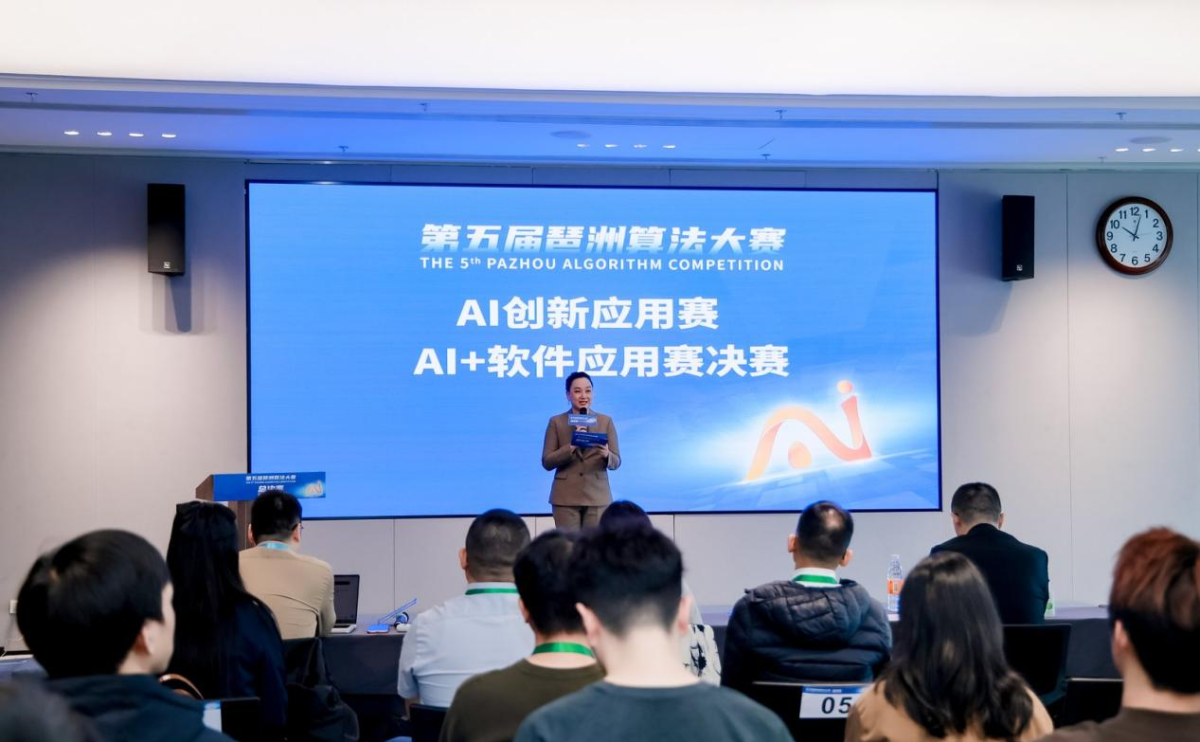
The global in-person finals of the 5th Pazhou Algorithm Competition took place at the Canton Fair Complex from November 23 to 24. Six final rounds, 10,263 registered teams and participants from 87 countries and regions. Beyond these figures lie subtle yet remarkable transformations the competition has undergone over five years.
The Pazhou Algorithm Competition no longer merely judges how well an algorithm performs in benchmark tests. Instead, it tests whether it can work in practice. From real-robot trials to commercial deployment, from university laboratories to industrial frontlines, the contest, through these rigorous, down-to-earth rounds of competition, keeps exploring one core question: can algorithms sustain their value once they step out of the competition arena?
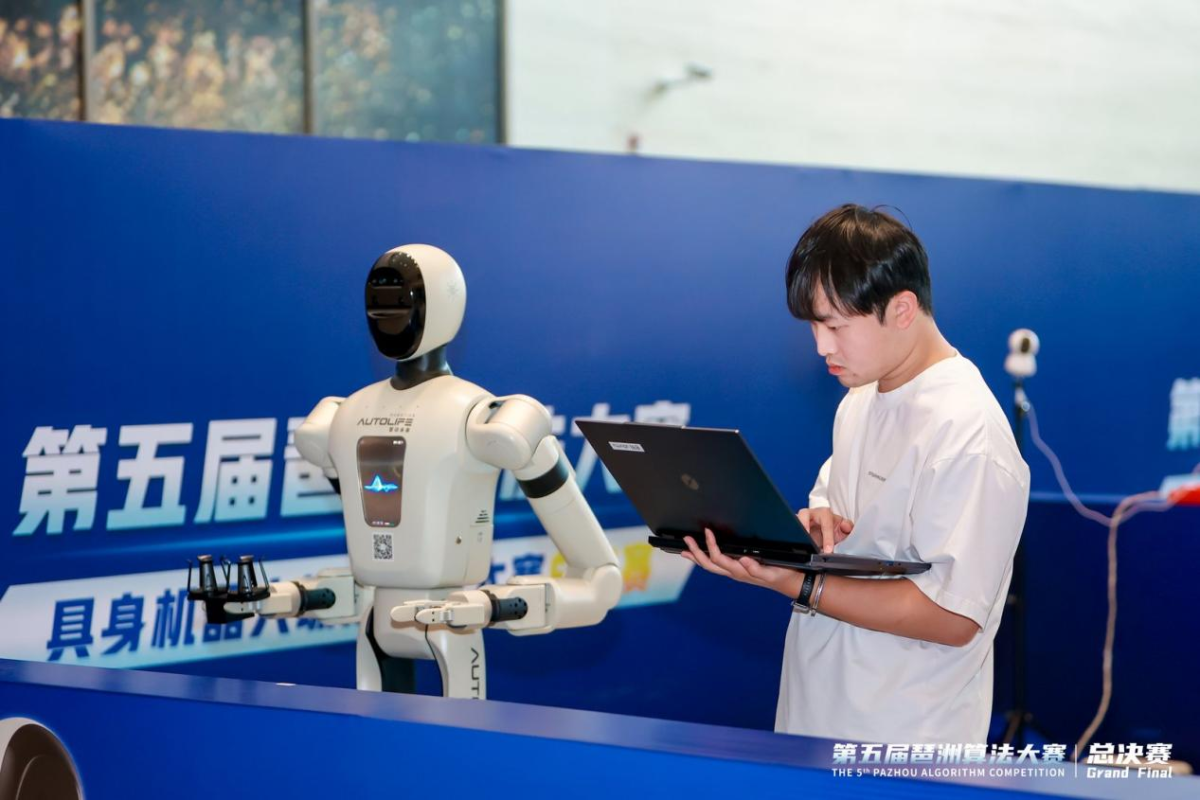
The embodied robot scenario challenge stands out as the segment closest to actual industrial operations in this edition. All runs are conducted on physical robots rather than simulated models. Once participants finish setup and step away, the robot must operate autonomously. If its grasp slips or an object is knocked over, the program needs to detect the failure independently, replan its actions and retry the task. A single successful attempt is not the benchmark; the real test lies in whether the robot can recover on its own after a setback.
Ye Zhipeng, Director of Marketing and Brand at Guangdong Zhidong Future Technology Co., Ltd., co-organizer of the track, has witnessed first-hand how the competition fuels R&D. He explained that the company designs diverse challenge tracks based on genuine commercial scenarios to validate technical performance. Focused on commercial humanoid robots, it leverages its fully self-developed robot brain and cerebellum systems, as well as world models, to enable generalization across multiple scenarios, with its robots already in regular operation across multiple locations. "Rooted in the Guangdong-Hong Kong-Macao Greater Bay Area, we benefit from its mature supply chain and talent pool to accelerate commercialization. We now serve over 50 clients with orders for more than 400 robot units," Ye noted. For him, the competition is more than an arena; it is an accelerator bringing technologies to market.
Peng Shaoliang, Yangtze River Scholar and Deputy Director of the National Supercomputing Changsha Center, also serves as a competition judge and shares this view. He observed that participating projects have made steady progress in technical maturity and application coverage, with applications flourishing across biomedicine, smart transportation and digital finance. "Many teams have already generated commercial revenue," he said. In Peng''s assessment, after five editions, the Pazhou Algorithm Competition has grown into a prominent AI brand for Guangdong Province and the whole country. "It provides a high-quality showcase platform for enterprises, universities and institutions, facilitates deep collaboration between academia and industry, incubates innovative teams and supports university-industry joint startups."


- Tel:+86-010-68891122
Copyright ©1997- by CRI Online All rights reserved
