
beijing
CRI Online: With a legacy spanning a thousand years, the brush, ink, paper, and inkstone — collectively known as the "Four Treasures of the Study" — are traditional Chinese tools for calligraphy and painting, embodying the aesthetic tastes and profound historical heritage of ancient China. As the "City of the Four Treasures of the Study," Xuancheng in Anhui Province continues to safeguard and pass down the craftsmanship behind these tools. Today, the city is breathing new life into these ancient techniques, bringing these Chinese cultural treasures to a broader global stage.
On August 6, foreign diplomats from countries including Ethiopia, Latvia, Botswana, Guinea, the Dominican Republic, and Bosnia and Herzegovina gathered in Xuancheng for a cultural exchange event centered on the Four Treasures of the Study. They engaged in in-depth discussions with intangible cultural heritage inheritors and local enterprise leaders on the preservation, innovative development, and international communication of traditional culture. Drawing from their own cultural backgrounds and their observations in Xuancheng, the diplomats shared their insights on the international exchange of these cultural treasures.
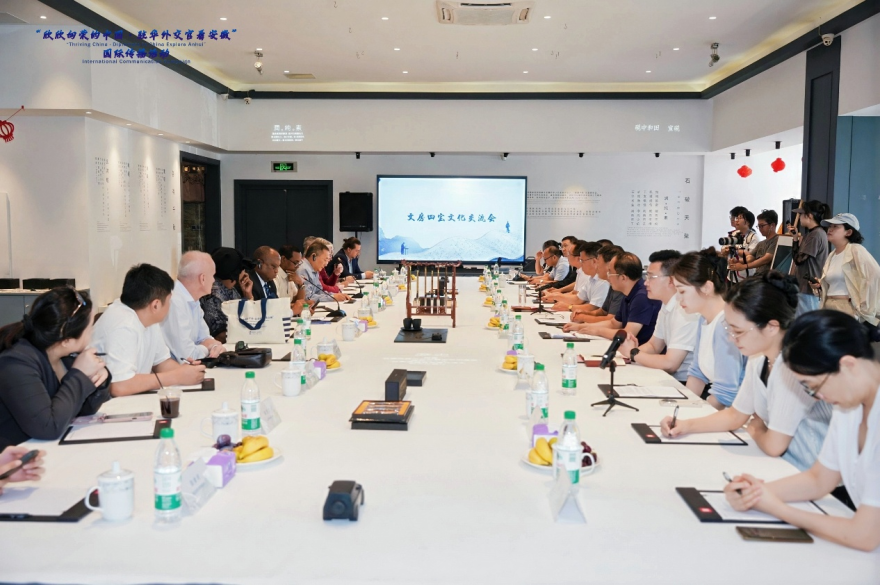
The Four Treasures of the Study Cultural Exchange Event.
Finding Cultural Ties Through Shared Heritage
"The craftsmanship of Xuan paper, along with its related traditional culture, is one of China's significant contributions to human civilization," H.E. Mr. Tefera Derbew Yimam, Ethiopian Ambassador to China, remarked during the exchange. He noted that his visit to Xuancheng provided him with a profound understanding of the Xuan paper-making process. From the treatment of raw materials to the meticulous handcrafting, every step reflects the wisdom embedded in ancient Chinese techniques.
The Ambassador emphasized that while different civilizations have distinct forms of cultural expression, they all reflect humanity's shared pursuit of preserving knowledge, historical memory, and civilizational continuity. He suggested that exploring the commonalities among different cultures can further promote mutual learning and exchange between civilizations.
Drawing Strength for the Future Through Preservation
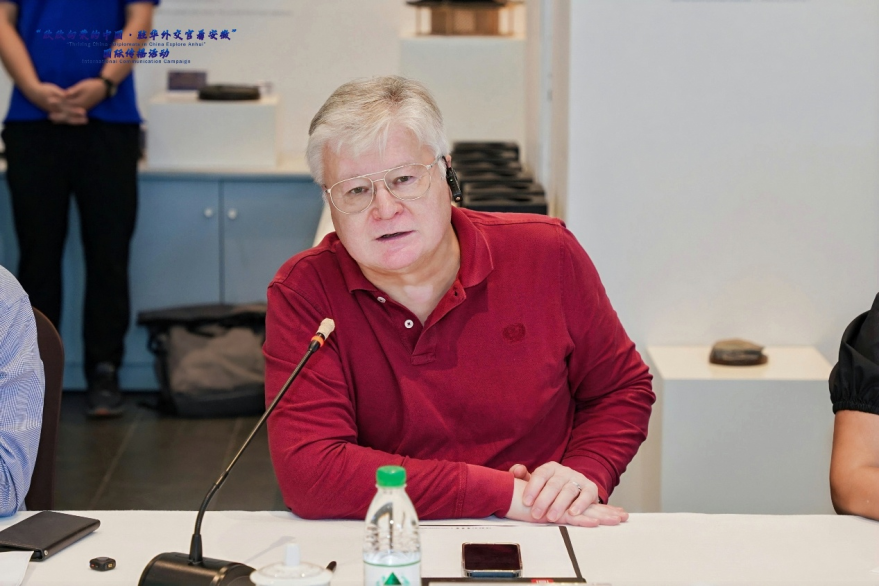
H.E. Mr. Kārlis Eihenbaums, Latvian Ambassador to China, speaks at the event.
"If a nation cannot protect its own traditions, it will be very difficult for it to have a future," stated H.E. Mr. Kārlis Eihenbaums, Latvian Ambassador to China. He shared that the visit offered him an in-depth understanding of traditional Chinese culture, particularly the ancient arts of papermaking and inkstone carving. It also deepened his understanding of the shared values different civilizations hold regarding the protection and inheritance of traditional culture.
During the tour, Ambassador Eihenbaums spoke highly of Xuancheng's practical efforts in preserving traditional craftsmanship. He observed that the local community not only safeguards precious cultural heritage but also actively engages the younger generation, injecting new vitality into traditional culture. In his view, traditional culture is not merely a historical memory of the past, but a vital link connecting the past to the future. Encouraging young people to understand and participate in this inheritance is key to sustainable cultural development.
Telling China's Story Through Artisanal Dedication
At the symposium, Zhang Wennian, Wang Nan, Zhu Daguo, and Huang Taihai — representatives of local enterprises and inheritors of the intangible cultural heritage of the brush, ink, paper, and inkstone — shared their experiences in protecting and innovating these traditional crafts. The diplomats listened attentively, gaining a deeper appreciation for the cultural significance and contemporary value behind the Four Treasures.
Peng Xiyuan, Vice Chairman of the Xuancheng Municipal Committee of the Chinese People's Political Consultative Conference (CPPCC), noted that in recent years, Xuancheng has cultivated generations of artisans skilled in brush-making, papermaking, ink-making, and inkstone-carving. By leveraging cultural heritage to boost local industries, the city has promoted live demonstrations of these crafts and the continuous innovation and upgrading of the cultural and creative sectors. Peng expressed hope that this exchange event would serve as a new starting point to deepen cultural connectivity and broaden economic and trade cooperation, allowing Xuancheng's brush and ink to cross oceans and connect with the world.
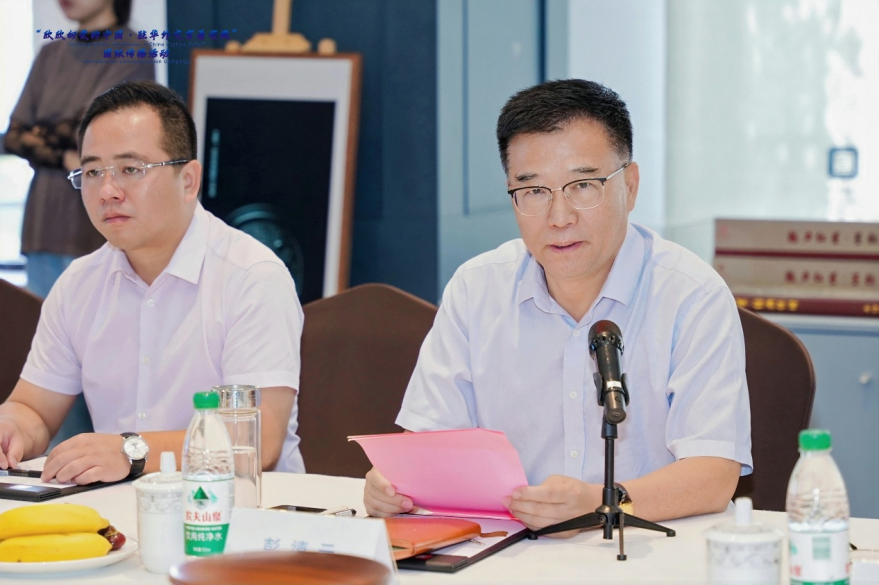
Peng Xiyuan, Vice Chairman of the Xuancheng Municipal Committee of the CPPCC, speaks at the event.
The Four Treasures of the Study carry a thousand-year cultural legacy and serve as a bridge for modern cultural exchange. For the foreign diplomats, what they saw, heard, and felt in Xuancheng was not only an opportunity to deepen their understanding of traditional Chinese craftsmanship but also a profound dialogue on cultural inheritance and civilizational exchange.


Copyright ©1997- by CRI Online All rights reserved
