
beijing
The final of the Embodied Robotics Application Competition, part of the 5th Pazhou Algorithm Competition, was held at the Canton Fair Convention Center in Guangzhou from November 23 to 24. A total of 36 teams, selected through multiple rounds from 366 competing teams comprising more than 1,000 participants, advanced to the final round to compete across four tracks, with a total prize pool of 517,000 yuan. Unlike conventional algorithm competitions, this event put real-world robot performance at the center of evaluation. All participating teams were provided with standardized robots, and simulation results did not count toward their scores. The three offline tracks were judged entirely on the robots' actual performance in real-world tasks, while the AIGC track was evaluated online.
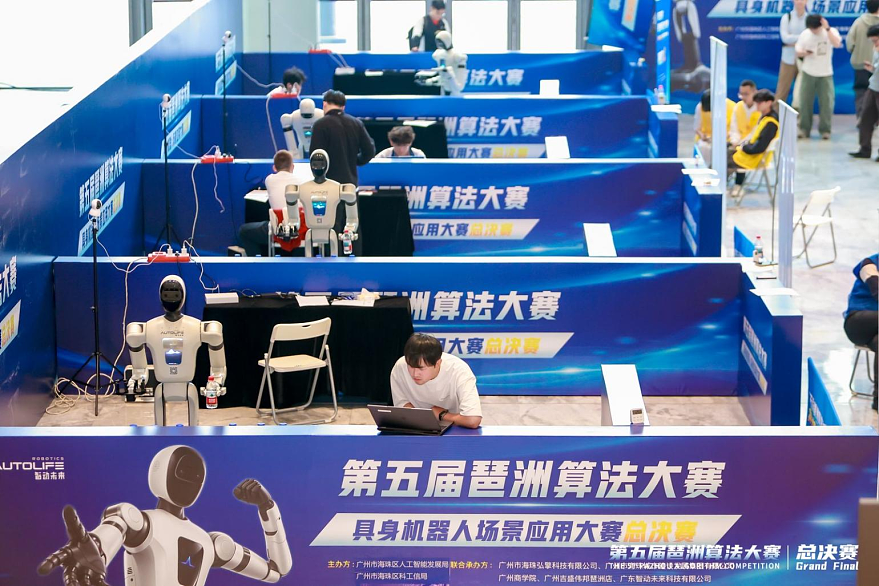
"Real-robot testing does not limit the level of difficulty, but determines where errors are attributed," said a representative of Guangdong Zhidong Future Technology Co., Ltd., one of the event organizers. The representative explained that variables such as on-site differences in lighting and materials, deviations in grasping poses, cumulative navigation errors, and control latency cannot simply be eliminated at the code level. Instead, they are exposed through the robot's physical movements and must be addressed through algorithmic adjustments. By providing all teams with identical robot platforms, the competition ensures consistent testing conditions, allowing each point deduction to be traced to specific aspects of perception, planning, control, and task orchestration.
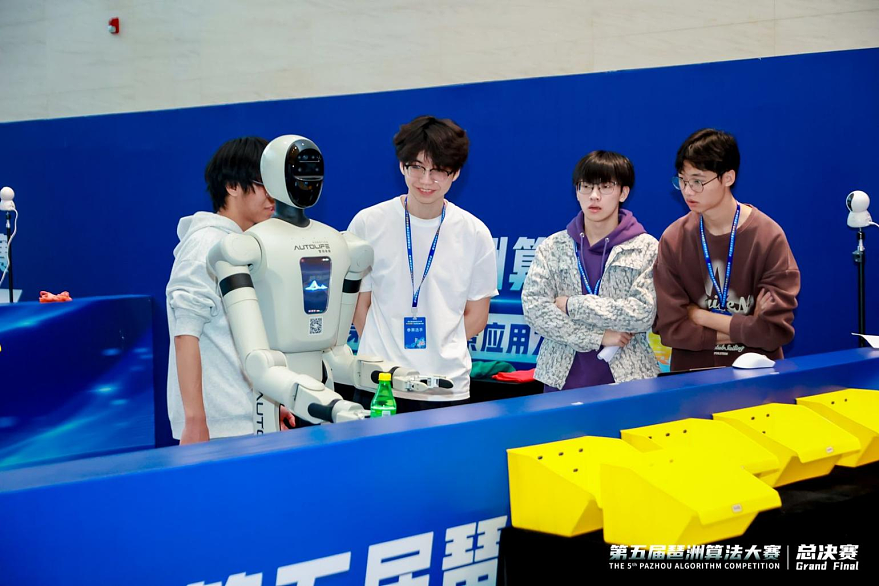
Whether an algorithm works ultimately depends on how it performs in real-world scenarios. Zhidong Future's robots have already been deployed across four major sectors—exhibitions, catering, cultural tourism, and retail—with operations spanning Guangzhou, Shenzhen, Xi'an, Changsha, and Hong Kong. At the 140th China Import and Export Fair (Canton Fair), 16 Xiaozhi S3 robots were deployed across eight locations throughout the 18-day event, providing visitor guidance, coffee delivery, and reception services. Other real-world applications include the world's first 6S robot restaurant, Guangzhou Langham Place, Datang Everbright City in Xi'an, and Wong Tai Sin Temple in Hong Kong. The company is currently building a production facility covering approximately 6,000 square meters and has a team of more than 130 engineers and PhD holders. Meanwhile, its scenario-based trading platform, integrated with the competition's official website, has published 218 orders, with nearly 240 million yuan in potential transaction value. The platform has facilitated more than 400 business matchmaking sessions, resulting in eight signed projects with a total contract value of 8.269 million yuan.


Copyright ©1997- by CRI Online All rights reserved
