
beijing
On November 25, the Ecosystem Empowerment Conference of the 5th Pazhou Algorithm Competition was held in Pazhou, Guangzhou. A total of 10,263 teams from 87 countries and regions registered for the contest. Award-winning algorithms, collaborative projects and innovation platforms were showcased at the event. As a global algorithm competition oriented toward industrial applications, the Pazhou Algorithm Competition follows the philosophy of “Industries set the questions, the world submits solutions, and the market marks the papers”. It is building on algorithmic competition to develop an ecosystem that supports application matching, technology commercialization, enterprise incubation and talent attraction.
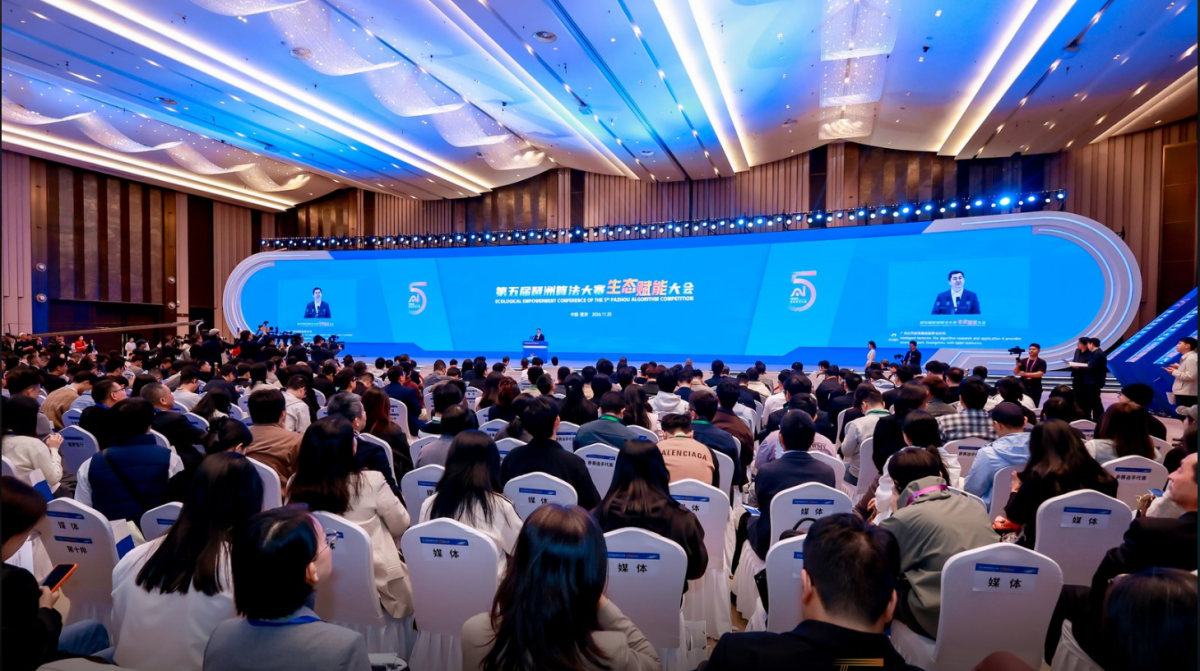
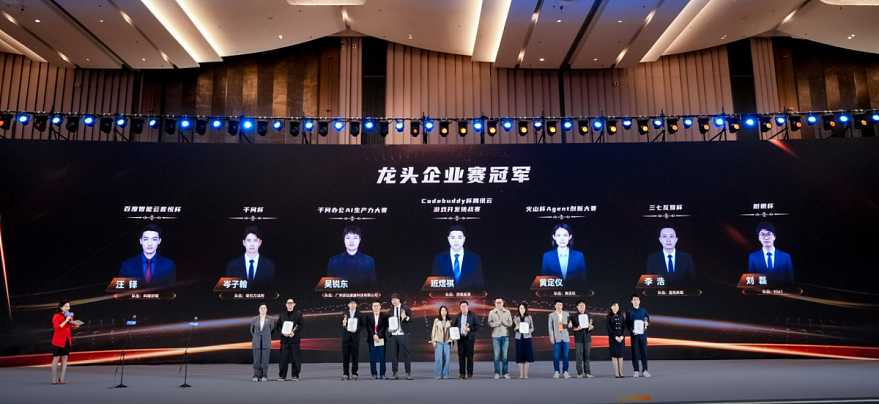
At the conference, the Algorithm Time Corridor showcased breakthroughs and commercialization outcomes generated across all five editions of the competition. Yuan Yaxiang, a member of the Chinese Academy of Sciences, noted that the Pazhou Algorithm Competition has grown into a key platform for talented young people nationwide to move from academia to frontline industrial practice. This year’s competition featured 25 problem statements covering five tracks: innovative AI applications, cutting-edge specialized challenges, international AI, ecosystem cooperation, and algorithm selection for large AI models. Leading enterprises translated real operational challenges from their production and business workflows into competition problems, while opening up application scenarios and datasets for participants.
Ecosystem empowerment is first reflected in the establishment of innovation platforms and the deployment of cutting-edge technologies. During the conference, five enterprises from Haizhu District unveiled their sector-specific world models in China for the first time, spanning industrial manufacturing, autonomous driving, embodied intelligence, space-based AI computing and other fields. IROOTECH (formerly ROOTCLOUD) launched a pixel-level industrial world model for dynamic welding; Zaofu Intelligence’s world model supports simulation-based training for autonomous driving; AutoLife Robotics released its Particle-Grounded Differentiable World Model for general embodied intelligence; Yusuanxinghe’s model supports on-orbit simulation for remote sensing satellites; Wuyan Intelligence’s model enables intelligent agents to continually improve their cognition and decision-making. Meanwhile, the first list of accredited artificial intelligence enterprises was announced, with 10 enterprises selected. The China Academy of Information and Communications Technology (CAICT), together with relevant institutions, piloted the Evaluation System for AI Pioneer Enterprises, selecting 52 AI pioneer enterprises for inclusion in a tiered development list. The HKUST InnoBay × Pazhou Mofang Joint AI Accelerator was also officially established, providing further support for Pazhou’s AI industrial hub.
Behind the competition’s tangible results lies a commercialization framework that links the competition arena to the marketplace: the “Algorithm Application Mart — AI Scenario Trading Platform — Scenario Alliance — Scenario Manager” system. Award-winning algorithms from previous editions are archived in the government-led Algorithm Application Mart. Scenario Expressway, Guangdong’s first AI scenario trading platform, features sections for scenario opportunities, application capabilities and investment opportunities. It enables data connectivity between the competition platform and Haizhu’s scenario trading platform, allowing contestants to explore commercial opportunities while taking part in the contest. Commercial orders are generated through both government and market channels, with market-sourced orders accounting for 94 percent of the total.


Copyright ©1997- by CRI Online All rights reserved
