
beijing

In April, Hong Kong is alive with gentle spring breezes and the vibrant pulse of Victoria Harbour. On the morning of April 14, the AI for Better Life Forum of the 2026 World Internet Conference Asia-Pacific Summit was held in Hong Kong. Distinguished guests from across the Asia-Pacific and beyond convened at the Hong Kong Convention and Exhibition Centre to exchange insights, showcase achievements, and jointly envision how artificial intelligence can enhance everyday life under the theme "AI for Better Life".
Makhsudov Jamol, Deputy Minister of Digital Technologies of the Republic of Uzbekistan, and Wu Dong, Chief Engineer of Cyberspace Administration of China, attended the forum and delivered remarks. Keynote speakers, including Nii Narku Quaynor—widely known as the "Father of the Internet in Africa" and Chairman of Ghana Dot Com—shared perspectives on bridging the intelligence divide, leveraging digital technologies to improve livelihoods, and advancing data governance. Representatives from leading companies such as PDD Holdings Inc., JD.com, Tesla, and Seres also contributed to discussions on how AI is reshaping business ecosystems and creating broader social value. Participants broadly agreed that the advancement of AI depends on openness and collaboration, while its real impact hinges on grounding technologies in local contexts. Striking a balance between innovation and governance, they noted, is essential for ensuring that AI truly benefits households and communities worldwide.
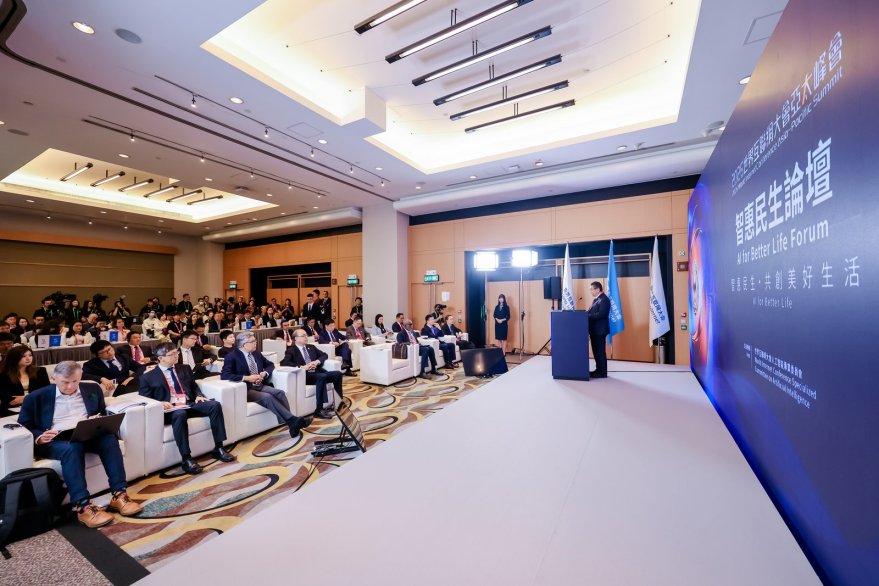
International Cooperation: Bridging the "AI Divide"
Makhsudov Jamol stressed that international cooperation is essential; the development of artificial intelligence cannot be carried out in isolation. If cutting-edge AI technologies remain concentrated in just a handful of countries, the digital divide could evolve into a far deeper AI divide.
Wu Dong stated that deeply integrating artificial intelligence into healthcare, education, social security and other core sectors closely tied to people's livelihoods is key to moving the technology from laboratories to society, and from pursuing "technical metrics" to delivering "social value". This approach not only sharply improves service efficiency but also upholds the people-centered spirit of technology, ensuring AI truly benefits the public and serves everyday people.
Nii Narku Quaynor noted that three decades ago, the internet connected the world and improved lives. Today, artificial intelligence is transforming the globe in profound ways. Only by sharing the benefits of AI development with all humanity can we prevent the emergence of a new "AI divide".
Technological Dividends: From Anxiety to Opportunity
Gong Ke, Executive Director of the Chinese Institute for the New Generation Artificial Intelligence Development Strategies, pointed out that while AI has sparked anxiety over job displacement, historical experience shows technological progress expands overall employment and creates new professions. Artificial intelligence serves as a driver of changes in employment patterns, not a terminator. With proper policies and responses, AI will eventually drive industrial upgrading just as the steam engine and computer did, sharing technological dividends with all workers and delivering a better life for all.
Chung NG, Deputy Commissioner (Data Governance), Digital Policy Office, the Government of the HKSAR, noted that amid social changes driven by AI, the HKSAR Government has rolled out multiple measures for smart city and digital intelligence development. Hong Kong is actively aligning with the 15th Five-Year Plan, ramping up budgetary investment to deepen AI integration across all sectors.
John Higgins CBE, Chair of the International AI Governance Association, drew on his professional experience to analyze key global challenges in AI governance and propose targeted pathways. He emphasized that as AI applications accelerate, governance frameworks remain relatively lagging. Only by striking a dynamic balance between regulation and innovation, upholding ethical principles, and addressing disruptions to industries and employment can AI benefit humanity in a safe, inclusive and equitable manner.
Corporate Practices: Making AI Work on the Ground
Zhu Zheng, Executive President, PDD Holdings Inc., shared the company's practices: Pinduoduo has leveraged technological innovation and new models such as "Farm-to-Cloud Group Buying" to break new ground in e-commerce, focusing on agricultural products as a key entry point. Upholding the principles of "inclusiveness, people-first, and openness", the company uses distributed artificial intelligence to optimize supply-demand matching, effectively serving hundreds of millions of consumers and merchants.
He Xiaodong, Senior Vice President and Head of AI Innovation, JD.com, stated that artificial intelligence has achieved leapfrog development over the past decade. It has not only driven the large-scale application of commercial digital humans, but also deeply integrated AI with robots, robotic dogs, smart toys, home appliances and smart homes. This has spawned new forms of intelligent embodied AI that can perceive, understand and interact responsively.
Tao Lin, Vice President, Tesla, Inc., noted that Tesla deeply integrates AI technologies including autonomous driving and humanoid robots with solar energy and energy storage businesses. The company is committed to building a safer, more efficient and sustainable ecosystem for smart mobility and energy services.
Clifford Kang, Vice President, Seres Group Co., Ltd., shared its corporate practices: Seres has partnered with Huawei to build the AITO brand, with the core philosophy of "Redefining Luxury Through Intelligence". Backed by leading intelligent driving and smart cockpit technologies, it delivers users a high-quality smart mobility experience.
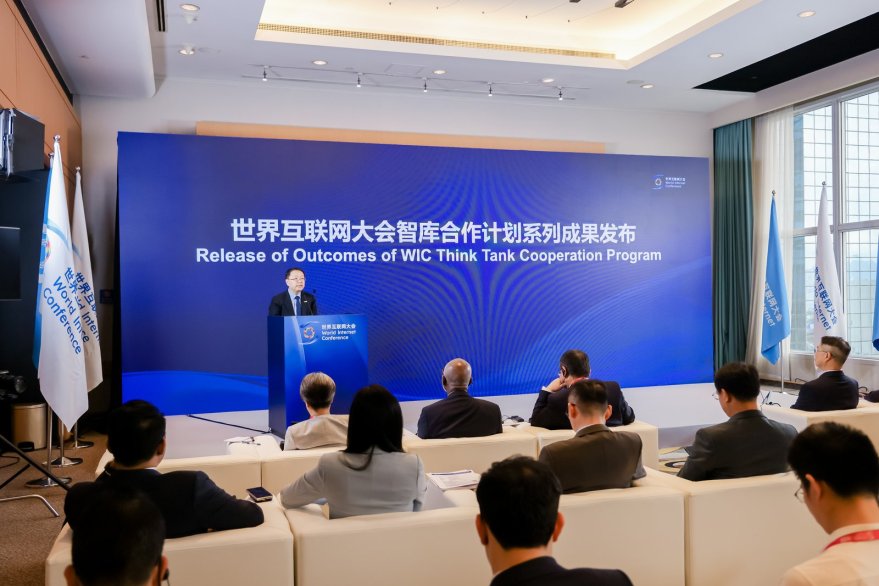
In addition, the forum released eight major research achievements centered on the two themes of "AI for Better Life" and "AI Governance". They cover key areas including AI open-source ecosystems, intelligent evaluation systems, the global AI divide, smart government, content governance, and international legislative coordination. These outcomes provide solid theoretical support and practical pathways for the high-quality, inclusive development of artificial intelligence in the Asia-Pacific region.


Copyright ©1997- by CRI Online All rights reserved
