
beijing
Video produced by Guo Zhiyong
Recently, Nankai University international students Umar Suleimanov (Tajikistan) and Sona Mehdizade (Azerbaijan) visited the Wangqingtuo Service Area on the Beijing-Shanghai Expressway in Tianjin's Wuqing District. They explored commercial facilities, tasted time-honored delicacies, purchased local produce, and toured the Bicycle Culture Experience Hall. Through this immersive visit to "China's No. 1 Bicycle Town," they witnessed how modern expressway rest stops integrate green technology, industrial culture, and public services, showcasing China's high-quality development.

The Wangqingtuo Service Area of the Beijing-Shanghai Expressway in Wuqing District, Tianjin. Photo by Zheng Qian
Located at marker K87+200 on the Beijing-Shanghai Expressway, Wangqingtuo is the first all-green energy service area in the Beijing-Tianjin-Hebei region. It is Tianjin’s first open-access, smart-operated service area, boasting the city's largest comprehensive service building and the region's first expressway bicycle culture hall. Following upgrades, the facility fully opened in August 2025. Spanning a 21,000-square-meter building and a 90,000-square-meter parking lot, its capacity expanded to 670 spaces, accommodating approximately 30,000 vehicles and 62,500 visitors daily.
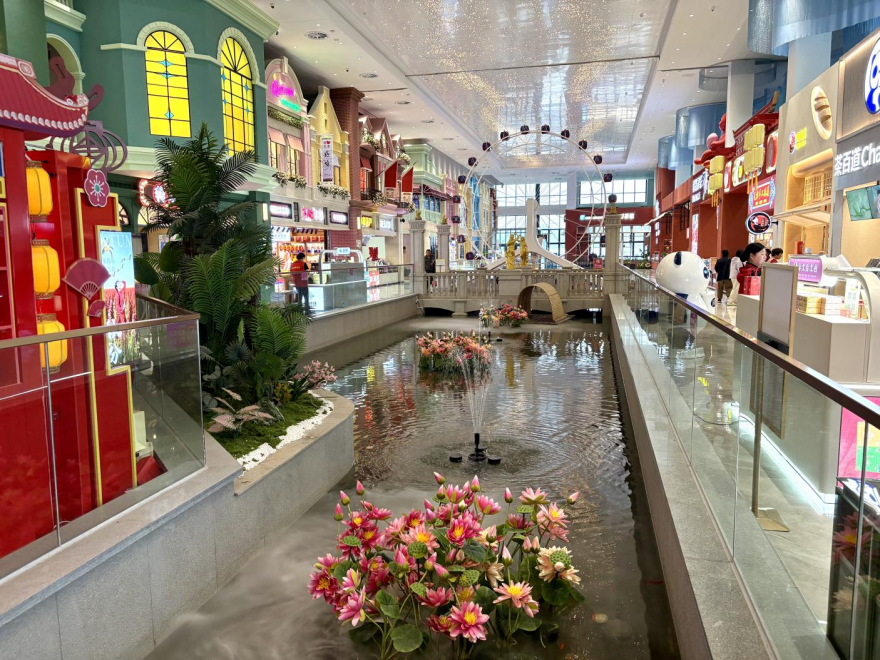
The distinctive commercial block inside the Wangqingtuo Service Area. Photo by Liu Ying

A staff member of the Tianjin Expressway Group offers hand wipes to the international youth. Photo by Liu Ying
Adhering to a "quick stop, slow experience" concept, the area integrates dining, shopping, exhibitions, and tourism. It features architectural nods to Tianjin landmarks like the Shizilin Bridge and Tianjin Eye. Umar and Sona were immediately drawn to the diverse businesses, enjoying one-stop shopping and authentic local cuisine.
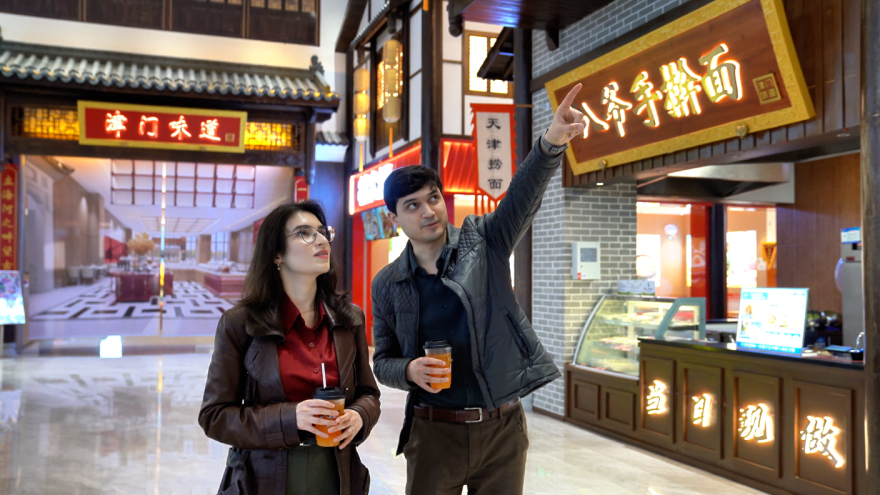
The international youth visit the internal commercial area of the Wangqingtuo Service Area. Photo by Guo Zhiyong
"The handmade Mahua (fried dough twists) are crispy and sweet, the steamed buns are tender, and I also tried the Sanhe fried chili. Every bite is full of local character," Sona shared excitedly. The area gathers time-honored brands like Goubuli alongside popular restaurant chains, offering a comprehensive taste of Tianjin's food culture.
In the agricultural exhibition hall, the students browsed the "Wuqing Gifts: Wangqingtuo Agricultural Products" collection. The rich variety of specialties, including sweet potatoes and roasted nuts, highlights Wuqing's agricultural vitality. "It's incredibly convenient for travelers to see such a comprehensive display right on the expressway," Umar praised.
The trip's highlight was the region's first expressway bicycle culture experience hall, integrating cultural displays, technology, and professional services. The students were impressed by the development history and complete industrial chain of Wangqingtuo's bicycle industry. Experiencing immersive VR cycling, they learned that Wangqingtuo—dubbed "China's No. 1 Bicycle Town"—houses hundreds of bicycle and e-bike enterprises. Producing over 12 million units annually, its products are sold globally.
"I just tried VR cycling. It’s fascinating to see my riding data while enjoying Tianjin's scenery on the big screen," Umar reflected. "The staff mentioned that one in every seven bicycles in China comes from Wangqingtuo. This is an extraordinary achievement for Chinese manufacturing."
Mao Fengyue, a Wangqingtuo publicity official, noted: "Recently, this facility was designated a national first-class service area. Leveraging our reputation as 'China's No. 1 Bicycle Town' and the area's massive visitor flow, we partnered with the Tianjin Expressway Group to build these cultural and agricultural halls. We hope travelers will stop here to experience cycling culture, taste authentic produce, and take home 'Made in Wangqingtuo' gifts."
The facility pioneers an open-access model, serving both expressway travelers and surrounding residents. It features an integrated "solar, storage, charging, and usage" energy microgrid generating roughly 10 million kWh annually. Its smart operations, industrial integration, and green initiatives make it a new model for expressway service areas.
Umar and Sona expressed that the trip showcased China's advanced transportation infrastructure, robust manufacturing, and profound food culture. As Silk Road youth, they are eager to serve as cultural envoys, sharing their experiences to promote mutual understanding. Transforming from a simple rest stop into a multi-functional complex integrating culture, tourism, and ecology, the Wangqingtuo Service Area is a vivid practice of integrated development. It serves as both a warm highway haven and a brilliant window for international friends to understand China's high-quality development.


Copyright ©1997- by CRI Online All rights reserved
