
beijing
On May 18, Wuhan was struck by a new wave of thunderstorms, strong winds, and torrential downpours, prompting the local meteorological department to issue multiple yellow alerts for heavy rain and lightning. Facing this severe test of extreme weather, the State Grid Wuhan Power Supply Company leveraged its newly launched "Power + Meteorology" smart prevention and control system. Rather than passively waiting for repair calls, emergency crews were proactively deployed to keep the city's lights on.
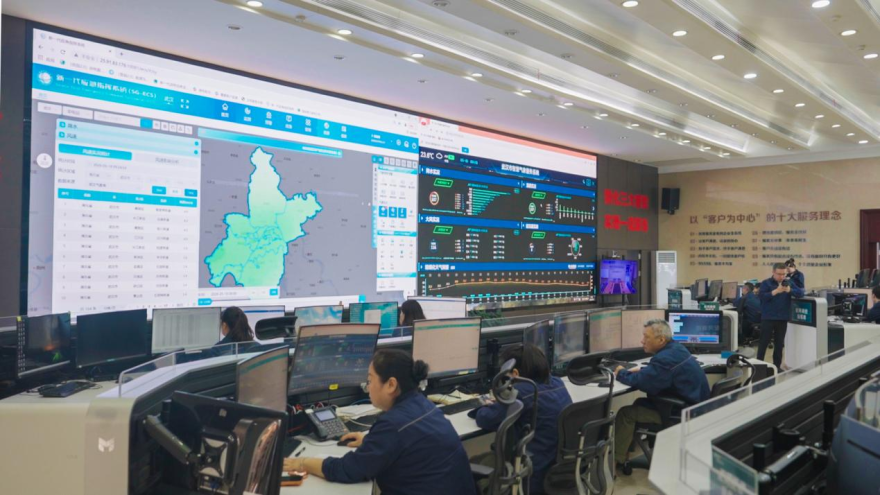
The emergency command system at the Power Supply Service Command Center of the State Grid Wuhan Power Supply Company. Photo by State Grid Wuhan Power Supply Company
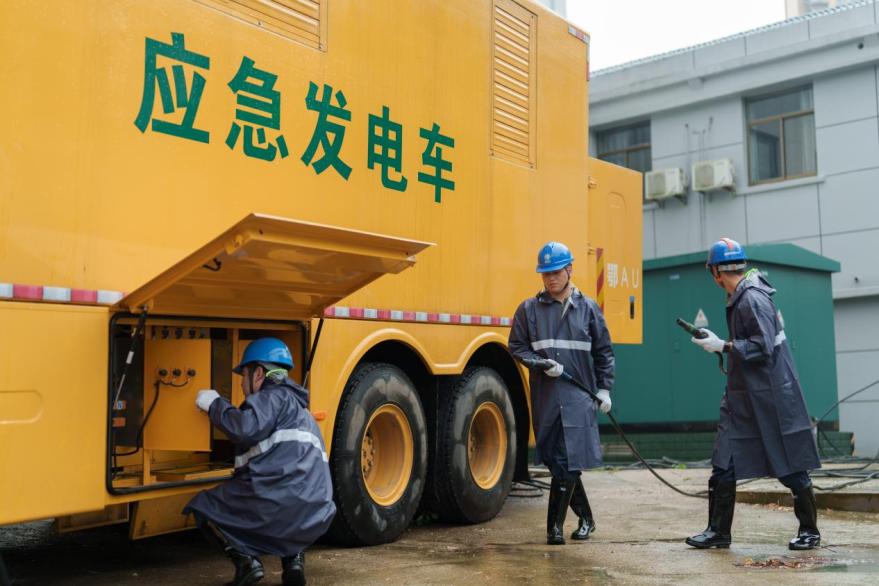
Emergency repairs underway at the Hongshan Power Supply Center. Photo by State Grid Wuhan Power Supply Company
The company has integrated command resources and information systems across multiple centers, including emergency command and production management. This establishes a multi-center collaborative network at both municipal and county levels that functions seamlessly during both routine and emergency operations. Externally, the company collaborates with the Wuhan Meteorological Bureau, integrating real-time monitoring data from over 300 weather stations and tens of thousands of meteorological grids citywide. This has created an all-in-one comprehensive power emergency system featuring weather early warnings, grid operation monitoring, emergency resource allocation, and power supply assurance command. The platform accelerates intelligent risk early warnings and enhances the precision of emergency resource dispatch, fundamentally shifting the emergency response model from "passive rescue" to "proactive defense."

Emergency repair personnel connect a mobile emergency generator. Photo by State Grid Wuhan Power Supply Company
Since the system's deepened application began on July 1, 2025, it has accurately forecast severe weather events 21 times and dispatched emergency power supply vehicles on 866 occasions. This has significantly elevated the efficiency of emergency response and power assurance during grid emergencies. Furthermore, it strengthens the foresight of risk early warnings, the precision of resource allocation, and the synergy of emergency commands, providing robust technical support for the safe and stable operation of the power grid. (Story by Wang Xin, Li Yueyuan, Wang Can, and Zhang Heng)

![[Flavors of China: Summer Burst] Cherries Ripen in Chengcheng County_fororder_9361e61f97ed89a5a08bab09adf24a3c(1)](http://v2.cri.cn/cb5a6d96-d0c4-4fd0-a895-b6135667d84a/image/00f73cf2feb54348afbe5d3340f7c3b7.1000x563.636x358.jpg)


Copyright ©1997- by CRI Online All rights reserved
