
beijing
Produced by: Zu Manru and Chai Haikuan
On May 14, 2026, the China-Central Asia Forum on State Governance and Sustainable Development (2026) took place at Lanzhou University's Chengguan Campus. The forum featured academic exchanges on key topics including the modernization of state governance, sustainable development, and high-quality collaboration under the Belt and Road Initiative (BRI). It offered academic insights and practical solutions to deepen comprehensive cooperation between China and Central Asia and build a China-Central Asia community with a shared future.
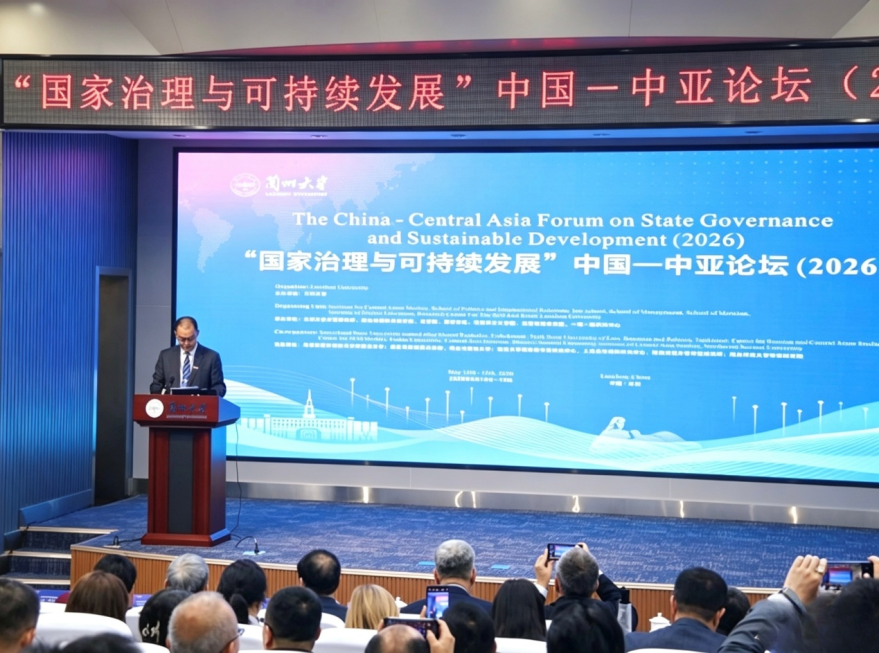
Highlights from the forum
The opening ceremony was chaired by Professor Zhu Yongbiao, Dean of the School of Politics and International Relations at Lanzhou University. Professor Sha Yongzhong, Vice President of Lanzhou University, delivered the opening remarks on behalf of the organizer. Professor Sha noted that Lanzhou University has long been committed to Central Asian studies and regional international cooperation, building a solid foundation in academic research, talent development, and inter-university exchanges. He stated that the university will use this forum as a key platform to further deepen academic exchange, research collaboration, and cultural engagement with universities across Central Asia, continuously expand the scope of cooperation, and strengthen the quality and effectiveness of partnerships—helping ensure the steady and sustained growth of China-Central Asia strategic cooperation.
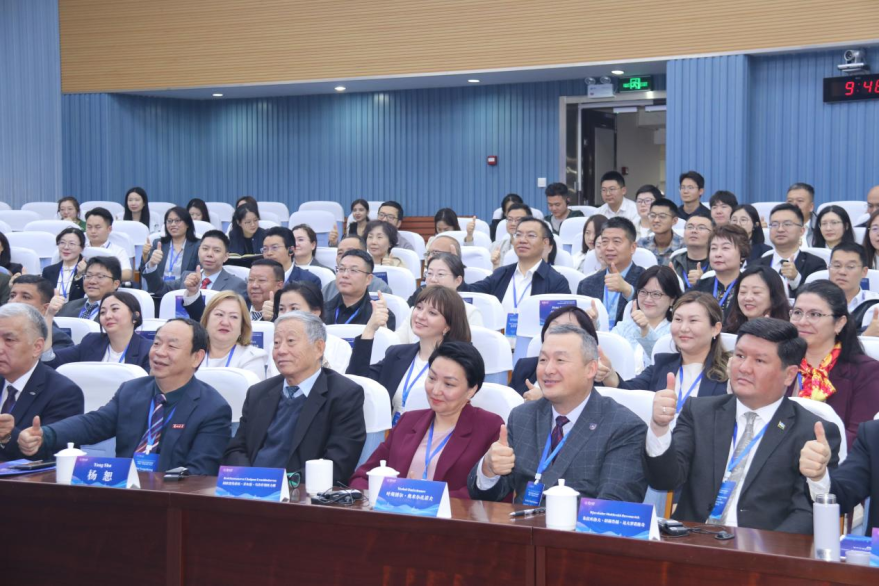
Highlights from the forum
Distinguished representatives from Al-Farabi Kazakh National University (Kazakhstan), the Tajik State University of Law, Business and Politics (Tajikistan), Samarkand State University (Uzbekistan), and Jusup Balasagyn Kyrgyz National University (Kyrgyzstan) addressed the forum. The participants commended the enduring friendship and practical outcomes of China–Central Asia cooperation. They highlighted the vital role of the Belt and Road Initiative in fostering regional connectivity and shared growth, expressing a collective commitment to deepening ties in education, science, technology, and culture to elevate bilateral exchanges to new heights.
During the keynote session, experts presented on the frontiers of regional cooperation. Professor Yang Shu, Director of the Institute for Central Asian Studies at Lanzhou University, delivered a keynote speech titled "Relations between China and Central Asian Countries in the AI Era." He systematically outlined new opportunities and pathways for bilateral relations amid the ongoing technological revolution, providing a theoretical framework for deeper cooperation in science, technology, and culture. Scholars from China and abroad engaged in in-depth discussions on BRI-based cooperation models, international cooperation in higher education, the evolution of Russian policy toward Central Asia, sustainable development within the Shanghai Cooperation Organization (SCO), and regional economic and trade cooperation, resulting in a series of targeted and constructive academic perspectives.
The forum featured seven thematic sessions: National Governance and Chinese Modernization; Legal Governance and Public Security; Management Issues in High-Quality Joint Construction of the Belt and Road; Digital Transformation of Higher Education Governance; Multilateral Mechanisms and the Development of the Shanghai Cooperation Organization; Political Transformation and Foreign Policy; and Regional Governance and High-Quality Joint Construction of the Belt and Road. The experts held discussions on key areas such as border governance, digital rule of law, cross-border cooperation, digital education, security governance, and people-to-people exchanges.

Highlights from the forum
Closely aligned with the broader context of China-Central Asia cooperation, this forum focused on core issues of state governance and sustainable development, serving as a high-level, specialized, and open platform for academic exchange. It further strengthened the scholarly consensus among Chinese and foreign experts, promoted practical cooperation between universities and research institutions, and played a significant role in modernizing regional governance, supporting the high-quality collaboration under the BRI framework, and building a closer China-Central Asia community with a shared future. (Text/Photos by Qin Jin and Kang Xiaoping)

![[Flavors of China: Summer Burst] Cherries Ripen in Chengcheng County_fororder_9361e61f97ed89a5a08bab09adf24a3c(1)](http://v2.cri.cn/cb5a6d96-d0c4-4fd0-a895-b6135667d84a/image/00f73cf2feb54348afbe5d3340f7c3b7.1000x563.636x358.jpg)


Copyright ©1997- by CRI Online All rights reserved
