
beijing
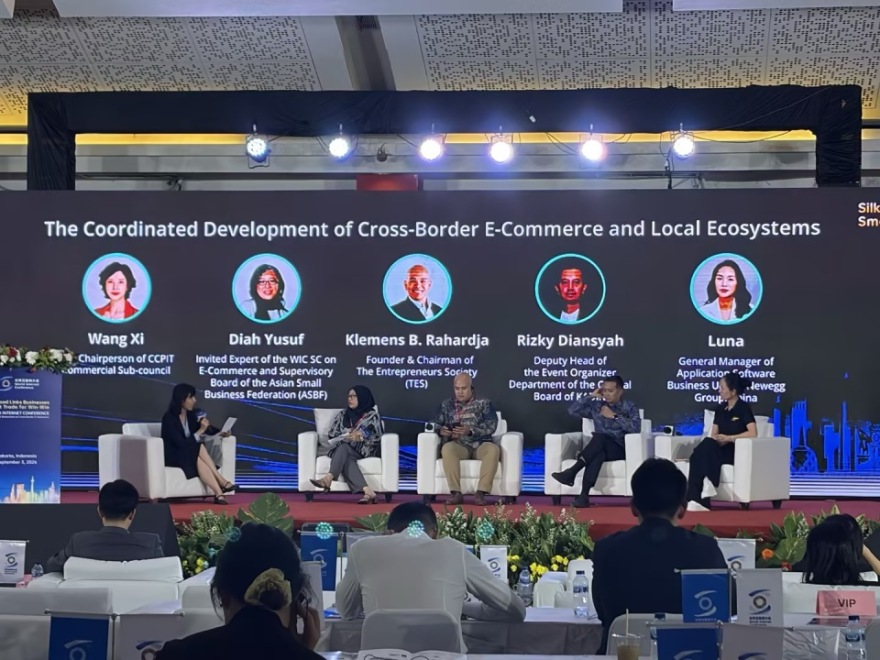
On September 3, the Cross-Border E-Commerce Practice Guide for Small and Medium-Sized Enterprises (the Practice Guide), a research outcome of the E-Commerce Professional Committee of the World Internet Conference, was officially released at the International Symposium on Cross-Border E-Commerce themed "Silk Road Links Businesses, Smart Trade for Win-Win" in Jakarta, Indonesia. The seminar was hosted by the World Internet Conference and organized by the China Council for the Promotion of International Trade Commercial Sub-Council.
In recent years, the global cross-border e-commerce market is expected to exceed USD 5 trillion, becoming an important driver of international trade and a key channel for small and medium-sized enterprises (SMEs) to access global markets. However, SMEs often face practical challenges when expanding overseas, including difficulties in identifying suitable markets, choosing the right business models, gaining operational experience, and making effective use of digital tools. To help SMEs reduce trial-and-error costs and take a steady first step into overseas markets, the E-Commerce Professional Committee of the World Internet Conference, together with its member organizations, industry institutions, experts and scholars, and representative enterprises, conducted multiple rounds of research over six months, including enterprise visits, in-depth interviews with service providers, and expert discussions. The Practice Guide was developed based on a focused study of the actual needs of SMEs engaged in cross-border business.
Based on the resources and business conditions of SMEs, the Practice Guide follows the business logic of "selecting markets, choosing business models, managing operations, and using tools". It consists of four sections covering target market access, business model selection, end-to-end operations, and practical applications of artificial intelligence (AI), along with an appendix of reference resources. Together, these sections cover the entire process from decision-making to implementation.
For market selection, the Practice Guide provides profiles of eight major global cross-border e-commerce markets. It notes that North America and Europe have large market sizes but relatively high compliance requirements, while emerging markets such as Southeast Asia and the Middle East are growing rapidly but differ significantly in infrastructure. It also proposes a three-step approach — macro-level assessment, competitive screening, and small-scale validation — to help enterprises first assess market size, growth potential, policy environment, and compliance costs; then select target markets based on their own products and the competitive landscape; and finally validate market demand through small-batch trial orders. This approach helps enterprises avoid making overseas expansion decisions based solely on intuition or market trends.
For business model selection, the Practice Guide compares mainstream models, including direct-to-consumer (DTC) independent websites, business-to-consumer (B2C) e-commerce platforms, business-to-business (B2B) platforms, social media commerce, and fully managed and semi-managed models, in terms of entry thresholds, operational requirements, and suitable application scenarios. It recommends that enterprises choose their market-entry paths based on their own characteristics. For example, manufacturing and integrated manufacturing-trading enterprises can leverage their supply chain advantages to start with relatively low-barrier supply-oriented models such as fully managed and semi-managed services, and then move toward branding and multichannel operations as their capabilities mature. The Practice Guide also advises enterprises to increase investment only after confirming that their gross profit margins can cover compliance-related costs, thereby promoting a prudent approach to entering international markets.
In terms of operations, the Practice Guide provides practical guidance on key areas including product selection and localization, supply chain and logistics fulfillment, finance and payment, and marketing and advertising, supplemented by action checklists and guidance on avoiding common pitfalls. For the application of digital tools, it includes a dedicated section on practical AI applications and proposes an implementation roadmap covering four stages: efficiency enhancement and substitution, decision support, business integration, and native intelligence. It outlines tool combinations and application methods for typical scenarios such as product selection analysis, content generation, customer service, and inventory management, while highlighting potential data security and compliance risks. The aim is to help enterprises make effective and practical use of AI.
According to the organizers, the Practice Guide is the first practical handbook of its kind to systematically compile real-world experience from cross-border e-commerce businesses. It provides SMEs with practical, actionable references for conducting cross-border business and offers useful insights for stakeholders seeking to better understand and support SMEs in expanding overseas. The publication is expected to further facilitate the integration of SMEs around the world into the cross-border e-commerce ecosystem and contribute to building an open, inclusive, and universally beneficial environment for digital trade.
The full text of the Practice Guide is available for download from the official website of the World Internet Conference.


Copyright ©1997- by CRI Online All rights reserved
